Definitely in the home stretch as far as reviewing goes. If I actually am able to finish reading the three books I have lined up before this challenge ends, I will also have met my goal of reading and reviewing 13 different Canadian authors.
This marks my first review of one of Timothy Findley's novels. He's definitely up there as far as my favorite Canadian authors. I enjoyed both Headhunter and Not Wanted on the Voyage quite a bit. I wasn't sure if I had read The Wars before or if it was Famous Last Words, but after a few pages in, it was clear to me that I had not read this book before. While I don't think Findley was particularly influenced by Kroetsch's The Studhorse Man, there are a few parallels. The somewhat unknown aspects of the character's inner life reconstructed from documentary evidence after the fact, the heavy foreshadowing of the main characters' tragic ends, some whorehouse hijinks, reflections on the "eternal" bond between man and horse (in both cases, the authors are well aware that mechanization has largely destroyed this relationship) and humans caring more for animal welfare than their own lives. As a bit of an aside, I can find this at least plausible in a post-Romantic era, Naomi Wallace's One Flea Spare has a somewhat similar plot point, but the action occurs in 17th Century London and I have a really hard time believing that humans of that era would risk their lives for horses.
One thing that this novel apparently did was to sort of re-inscribe Canadian participation in WWI in popular awareness (at least according to the introduction). That part didn't really come across as clearly, in part because I have little interest in WWI and partly because, as an American, I've never felt "left out" of any of the major wars of the Twentieth Century. It was certainly an interesting and fairly quick read, but not as rewarding to me as Headhunter. Incidentally, the next book I am reviewing is an earlier book (MacLennan's Barometer Rising) that also looked at Canada's role in WWI and the impact that the war had on Canada.
This was review 12/13.
Edit Aug. 2014 -- this is an absurdly short and meager review for a book that has become part of the CanLit canon. While I probably won't be rereading The Wars for quite some time (maybe not until the kids read it in high school!), when I do, I will try to do the book more justice in a second review.
Monday, May 21, 2012

Sunday, May 20, 2012
Canadian book challenge - 11th post
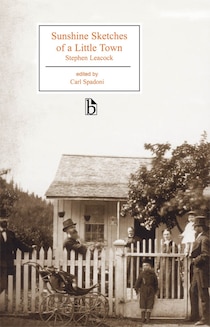
One of the very first books we read in my Canadian lit class was Stephen Leacock's Sunshine Sketches of a Small Town (the first might have been Susanna Moodie's Roughing It, which few of us enjoyed). I had a chance to return to this a while back. This book is kind of a gentle satire on the pretensions of the people who stay in a little town in Ontario (with its own train station!). It is very much in line with Garrison Keillor's Lake Woebegone stories (and perhaps a bit gentler than the Corner Gas TV show). It's enjoyable but it is hard to say too much about the book. The townsfolk are decent and well-meaning but not really the sharpest crayons in the box. Probably the most intriguing character is Mr. Smith who owns one of the most profitable bars (with attached French caff) in town. He runs rings around the other characters, and is a bit of a grafter, but even he is basically a decent sort (aside from wanting to build up a huge bank balance). Towards the end of the book, he runs for office. There is a funny moment when suddenly the townsfolk realize that Mr. Smith is going to win, and they all rush to cast their ballot, since they all want to be on the winning side. The sinking of a passenger ferry in the middle of a tiny lake is also unexpectedly comic, but I don't want to give away too much for those that haven't read the book.
As an aside, I'm having terrible trouble reconstructing the rest of the books we read in this class. Maybe I'll dig up the syllabus one of these days and see which of the books I'd like to reread. I do recall that my final paper was on Margaret Atwood's Cat's Eye, and I am just starting to reread this book over the long weekend. This is by far my favorite Atwood novel out of the five or so I've read (obviously I have a few left to go).

As an aside, I'm having terrible trouble reconstructing the rest of the books we read in this class. Maybe I'll dig up the syllabus one of these days and see which of the books I'd like to reread. I do recall that my final paper was on Margaret Atwood's Cat's Eye, and I am just starting to reread this book over the long weekend. This is by far my favorite Atwood novel out of the five or so I've read (obviously I have a few left to go).
Canadian book challenge - 10th post
Closing in on my review target. Actually just wrapped up three Canadian books this week (one of which I will not be reviewing) but I'm trying to review some of the books I read earlier before they completely slip my mind.
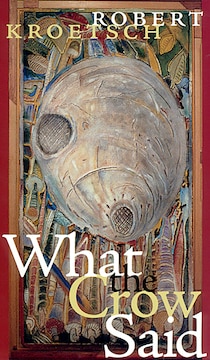
Kroetsch's What the Crow Said is a curious book. It seems to be the book that is the most in the magic realist tradition whereas many of his other novels are largely realistic with some far-fetched elements. (Gone Indian is probably the least strictly realistic prior to What the Crow Said.) But right from the start we know this is going to be a departure, when a teenaged? girl lies down in a meadow and is covered with bees, who not only bring her to orgasm but basically impregnate her. I suspect that Kroetsch was attempting to transplant the Greek mythos onto the Canadian frontier, but then lost interest and mixed in all kinds of other legends and tall-tales. This young woman is one of 5 sisters. All of them have unusual courtships. I'll probably get some of the details wrong, but this is basically what I recall. One marries a man missing a leg (and apparently his testicles) but still manages to get pregnant from the "ghost balls." One drives a convict crazy with her passionate letters and he spends much of his life trying to break out, which he does repeatedly, and join her, which I don't think he does achieve. The father freezes to death on his plow, and then the mother has two suitors, including a man that builds a lighthouse out of ice blocks. There is a card game that lasts a month. One of the sons was abandoned and raised by wolves, and then returns speaking a kind of pig-Latin.
For some reason this final detail about the pig-Latin bothered me more than almost all the others, and it kind of marked the moment when Kroetsch lost me on this book. It just was too much, one crazy thing layered on top of another until it finally comes to an end. One theatre reviewer puts it this way -- that a play (or novel) can have really odd ground rules, but once they have been established, then things must operate within those rules. You can't just keep having random things happen, as the audience will lose interest because there can't be any "stakes" without any internal logic. I really wanted the book to be better than it was, but ultimately the stakes were too low. I suppose most of Kroetsch's novels with the exception of The Studhorse Man have disappointed me a bit for one reason or another.
This is review 10/13.

Kroetsch's What the Crow Said is a curious book. It seems to be the book that is the most in the magic realist tradition whereas many of his other novels are largely realistic with some far-fetched elements. (Gone Indian is probably the least strictly realistic prior to What the Crow Said.) But right from the start we know this is going to be a departure, when a teenaged? girl lies down in a meadow and is covered with bees, who not only bring her to orgasm but basically impregnate her. I suspect that Kroetsch was attempting to transplant the Greek mythos onto the Canadian frontier, but then lost interest and mixed in all kinds of other legends and tall-tales. This young woman is one of 5 sisters. All of them have unusual courtships. I'll probably get some of the details wrong, but this is basically what I recall. One marries a man missing a leg (and apparently his testicles) but still manages to get pregnant from the "ghost balls." One drives a convict crazy with her passionate letters and he spends much of his life trying to break out, which he does repeatedly, and join her, which I don't think he does achieve. The father freezes to death on his plow, and then the mother has two suitors, including a man that builds a lighthouse out of ice blocks. There is a card game that lasts a month. One of the sons was abandoned and raised by wolves, and then returns speaking a kind of pig-Latin.
For some reason this final detail about the pig-Latin bothered me more than almost all the others, and it kind of marked the moment when Kroetsch lost me on this book. It just was too much, one crazy thing layered on top of another until it finally comes to an end. One theatre reviewer puts it this way -- that a play (or novel) can have really odd ground rules, but once they have been established, then things must operate within those rules. You can't just keep having random things happen, as the audience will lose interest because there can't be any "stakes" without any internal logic. I really wanted the book to be better than it was, but ultimately the stakes were too low. I suppose most of Kroetsch's novels with the exception of The Studhorse Man have disappointed me a bit for one reason or another.
This is review 10/13.
Wednesday, May 9, 2012
Canadian book challenge - 9th post
Not sure how surprising this is, but I've never read an entire novel by Mordecai Richler up until now. I actually owned a few but never got around to them before it was time to purge the shelves. I figure I'll correct that over time now that I am up here. I decided to start with one of his shorter, and perhaps not entirely representative, works: The Incomparable Atuk.
The novel was published in 1963. Now the notes at the end say how the book has not dated, and while that might have been conceivably true in the 1990s (when incidentally I lived in Toronto for a year), it is starting to show its age. I guess there are only so many times you can read variations on the same "hey look at person from Cultural Background X pull a fast one on liberal whites" before you get thoroughly sick of it. And I've read plenty along those lines. If the entire book was about Atuk and his adventures and misadventures in Toronto, then I probably wouldn't have made it to the end. However, the intelligentsia that meet Atuk in one party or another have their own side adventures. Perhaps the most amusing, if somewhat unlikely, event is when a policeman poses as a woman (whose lure is subversive literature) and falls in love with a female newspaper columnist posing as a man.
Anyway, the basic plot is that Atuk is introduced to Toronto society and becomes an instant hit with his poetry. He also brings down a bunch of relatives and has them working in a sweat shop making carvings and other Inuit art for Atuk to sell. His father (the Ancient One?) keeps moaning about terrible things (not too dissimilar from Aunt Ada in Cold Comfort Farm). He makes the rounds of various parties and realizes that his novelty is beginning to wear off. He eventually agrees to be a guest contestant on a particularly sinister/cynical game show. It is a quick read for sure and mostly entertaining, though I do feel it is starting to show some signs of wear and tear. For a similar take on high society and low society mixing (at parties as well as in the bedroom), I enjoyed Chester Himes' Pinktoes, which is set in Harlem. Published just 2 years prior to Atuk, it might be slightly more daring and may sustain its high spirits a bit more consistently.
This is review 9/13.
Friday, April 13, 2012
Canadian book challenge - 8th post
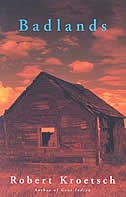
Badlands was Kroetsch's next novel after Gone Indian. While some aspects of post modern fiction linger, this is a bit more in the vein of Studhorse Man where some events are outsized, maybe even a tiny bit absurd (shades of magic realism), but we are more in the realm of tall tales (think Paul Bunyan) than Paul Auster. While the entire novel is initially framed through the perspective of Anne Dawe (the daughter of the main character), we aren't given any reason to think she is playing games with what actually happened or that she is a particularly unreliable narrator. However, the narrative does shift away from what might reasonably have been recorded in her father's journals and many of the core chapters are written about these past events from an omniscient perspective. Pretty typical in movies and fiction for that matter: we start in the present going over someone's diaries, then there is a flashback to what "really" happened. One of the more effective uses of this was in the play Three Days of Rain.
SPOILERS AHEAD:
The basic set-up is that William Dawe lead an expedition into the Canadian Badlands, looking for a dinosaur bones. While the odds are against him, particularly due to the inexperience of his crew, he makes a major find. He makes a minor name for himself and begins making annual expeditions to the Badlands. He essentially abandons his wife and young daughter, only making short visits between his expeditions. Ten years after his death, Anna, his daughter, starts going through his diary and eventually decides to retrace his first successful expedition. She runs across the Native American guide (Anna Yellowbird) who helped save her father on more than one occasion.
The bulk of the book is the expedition itself, particularly the inner conflicts between the various team members. (Often these chapters are framed with William's official journal entries.) It is hard to imagine a more disorganized crew. Towards the end, they have to recruit a very young man, who is a piano player in a whore house they encounter along the way. However, he does have some experience mining, and it is he who (fatefully of course) places the dynamite that they need to uncover enough of the main dinosaur skeleton to dig out the rest of the bones.
There are a few scenes that really do stick out -- the itinerant photographer (in a Model T Ford!) who takes a photo of the crew setting out for the Badlands and assures them they won't make it back out. The same photographer does take their photo on the way home. The house made of bones that Anna Yellowbird inhabits for a while. The ruckus/rumpus that Anna D. and Anna Y. get up to while retracing this expedition. I did feel sorry for Anna D. when she decided not to go off and sleep with the cowboy under the stars when she clearly wanted to. Not sure what Kroetsch was up to there. There are actually some odd parallels with his final novel (The Man From the Creeks) which is about a boy and his mother who go up into the Yukon to strike it rich (in the original gold rush) and he becomes a piano player in a saloon. He becomes quite old (like Anna Yellowbird) and is another case of thwarted sexuality (like Anna Dawe) where it seems so unnecessary. He ends up owning a saloon filled with cheap floozies for goodness sakes! I don't really care how hard you fell for your first puppy-love, over the next 50-60 years, it seems likely that one would indulge in the pleasures of the flesh as it were. But Kroetsch often writes about people that find themselves in impossible loves and don't try very hard to extricate themselves.
What is a bit different between the books is that while the mania for digging strikes all these characters hard, only a much smaller percentage of people lose their mind over dinosaur bones compared to prospecting for gold. It's not a bad book, but it isn't one I imagine I'll be rereading any time soon.
This is review 8/13.

SPOILERS AHEAD:
The basic set-up is that William Dawe lead an expedition into the Canadian Badlands, looking for a dinosaur bones. While the odds are against him, particularly due to the inexperience of his crew, he makes a major find. He makes a minor name for himself and begins making annual expeditions to the Badlands. He essentially abandons his wife and young daughter, only making short visits between his expeditions. Ten years after his death, Anna, his daughter, starts going through his diary and eventually decides to retrace his first successful expedition. She runs across the Native American guide (Anna Yellowbird) who helped save her father on more than one occasion.
The bulk of the book is the expedition itself, particularly the inner conflicts between the various team members. (Often these chapters are framed with William's official journal entries.) It is hard to imagine a more disorganized crew. Towards the end, they have to recruit a very young man, who is a piano player in a whore house they encounter along the way. However, he does have some experience mining, and it is he who (fatefully of course) places the dynamite that they need to uncover enough of the main dinosaur skeleton to dig out the rest of the bones.
There are a few scenes that really do stick out -- the itinerant photographer (in a Model T Ford!) who takes a photo of the crew setting out for the Badlands and assures them they won't make it back out. The same photographer does take their photo on the way home. The house made of bones that Anna Yellowbird inhabits for a while. The ruckus/rumpus that Anna D. and Anna Y. get up to while retracing this expedition. I did feel sorry for Anna D. when she decided not to go off and sleep with the cowboy under the stars when she clearly wanted to. Not sure what Kroetsch was up to there. There are actually some odd parallels with his final novel (The Man From the Creeks) which is about a boy and his mother who go up into the Yukon to strike it rich (in the original gold rush) and he becomes a piano player in a saloon. He becomes quite old (like Anna Yellowbird) and is another case of thwarted sexuality (like Anna Dawe) where it seems so unnecessary. He ends up owning a saloon filled with cheap floozies for goodness sakes! I don't really care how hard you fell for your first puppy-love, over the next 50-60 years, it seems likely that one would indulge in the pleasures of the flesh as it were. But Kroetsch often writes about people that find themselves in impossible loves and don't try very hard to extricate themselves.
What is a bit different between the books is that while the mania for digging strikes all these characters hard, only a much smaller percentage of people lose their mind over dinosaur bones compared to prospecting for gold. It's not a bad book, but it isn't one I imagine I'll be rereading any time soon.
This is review 8/13.
Canadian book challenge - 7th post
I wanted to start by acknowledging the very nice set of 4 poetry books donated by Brick Books to the Canadian Book Challenge at the Bookmineset blog. I was fortunate enough to win the set (yea!), and I will try to review at least two of the books before this challenge closes.
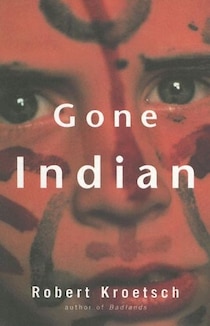
I am returning to Robert Kroetsch for the next two reviews. This review will cover Gone Indian (and is review 7 of 13). Gone Indian is arguably Kroetsch's first "post modern" novel, sort of foreshadowing What the Crow Said, Alibi and above all The Puppeteer. What makes a post modern novel? I'm very rusty on my literary theory, but generally it means a many-layered story (maybe with more than one framing device) where the core events are not "stable" -- in the sense that they may be viewed or described from many perspectives. That in itself is not unknown in conventional literature (Durrell's Alexandria Quartet is a classic example, though at least a few critics have said that it is in fact a proto-post modern novel or rather a suite of novels), though post modern novels usually take it further and events may be completely reversed when told and retold from these varying perspectives and it is unclear what actually "happened" (very much in the spirit of Rashomon, and there is certainly a case that Rashomon is also post modern rather than high modernist art because it refuses to posit one of the narratives as the "truth"). Post modern novels usually take the concept of the unreliable narrator to extremes. The Studhorse Man certainly has an unreliable narrator (who writes from his bathtub in a mental institution!), but Gone Indian does raise the bar since there are basically two unreliable narrators that are attempting to converse or at least make connection throughout the narrative. It is very unclear how the chief narrator (Dr. Madham) could know most of the events in the novel (as it seems unlikely that the second one would have actually committed so much to tape), so the reader is left wondering how much has simply been invented and filled in. One of the downsides of post modern novels is that they tend to be so intent on cleverness and game-playing that the characters are more obviously pawns being pushed around than in conventional fiction where the reader is expected to care about what happens to them. It is not uncommon for characters' motivations to be unclear or unstable in post modern fiction. I definitely feel this happens in The Puppeteer (which I am wrapping up now). Perhaps the best known example of post modern literature is Paul Auster's The New York Trilogy.
Gone Indian begins with a letter from Professor Madham to Jill Sunderland. It explains that Jeremy (the main character of Gone Indian) was a doctoral student out east who headed to Alberta to try to wrap up his dissertation. The rest of the book is sort of compiled from notes, letters and cassette tapes that Jeremy used for dictation and mailed back to his wife and/or Dr. Madham, though it should be noted that Madham pops up from time to time, adding his observations to the action. However, the tone is completely reversed from the conventional wrappers around works like Dracula or Frankenstein for instance. The Professor admits flat out that he disliked Jeremy and call him a terrible student. He then goes on to admit he is sleeping with Jeremy's abandoned wife! What an opening.
The action as related to the Professor begins with Jeremy heading off on a job interview. He is bringing his dissertation with him in a desperate attempt to finish it somehow along the way; thus proving to himself, if not the hiring committee, that he isn't a total failure. He often addresses the professor directly (through the medium of the cassette tapes) and sometimes insults him back and sometimes just seems sorry for himself. In any event, Jeremy's suitcase has been switched with Roger Dorck's. It also so happens that Roger Dorck was the reigning Winter King of the Notikeewin Winter Festival. He also went out on the fresh ice on a snowmobile, crashed through and is lying in a coma. Without thinking about it too much, Jeremy decides to take over Roger's role, though it isn't exactly the case that people think he is Roger. It can be a little hard to follow exactly why they let him take over as Winter King and judge the beauty pageant (this is probably the best set piece in the book). Later, Jeremy seems to want to take on the role of a Native Indian.
He takes up with several women throughout the course of the book. If I am not mistaken, he seduces or is seduced by both Roger's mistress and her daughter. But he tries to escape (on a different snowmobile) with yet a third woman. I suppose this demonstrates to me one of the drawbacks to postmodern fiction -- the stakes end up being lower and you often can't recall the plot even only a few months down the road. It's an interesting read, but it does pale in comparison to The Studhorse Man. Johnny Backstrom, MLA makes an actual cameo in this book when Jeremy and a few others crash at his funeral parlor and start up an epic card game (epic card games are definitely a recurring theme in Kroetsch's work). Johnny offers to let Jeremy sleep it off in a coffin, but then midway through the night he needs the coffin for Roger. At least Jeremy didn't end up buried alive. It might be after this "rebirth," that Jeremy decides to turn his back on his old life for good, setting up the ending when he tries to escape into a blizzard. At least that's how I remember it now. ;)
I am returning to Robert Kroetsch for the next two reviews. This review will cover Gone Indian (and is review 7 of 13). Gone Indian is arguably Kroetsch's first "post modern" novel, sort of foreshadowing What the Crow Said, Alibi and above all The Puppeteer. What makes a post modern novel? I'm very rusty on my literary theory, but generally it means a many-layered story (maybe with more than one framing device) where the core events are not "stable" -- in the sense that they may be viewed or described from many perspectives. That in itself is not unknown in conventional literature (Durrell's Alexandria Quartet is a classic example, though at least a few critics have said that it is in fact a proto-post modern novel or rather a suite of novels), though post modern novels usually take it further and events may be completely reversed when told and retold from these varying perspectives and it is unclear what actually "happened" (very much in the spirit of Rashomon, and there is certainly a case that Rashomon is also post modern rather than high modernist art because it refuses to posit one of the narratives as the "truth"). Post modern novels usually take the concept of the unreliable narrator to extremes. The Studhorse Man certainly has an unreliable narrator (who writes from his bathtub in a mental institution!), but Gone Indian does raise the bar since there are basically two unreliable narrators that are attempting to converse or at least make connection throughout the narrative. It is very unclear how the chief narrator (Dr. Madham) could know most of the events in the novel (as it seems unlikely that the second one would have actually committed so much to tape), so the reader is left wondering how much has simply been invented and filled in. One of the downsides of post modern novels is that they tend to be so intent on cleverness and game-playing that the characters are more obviously pawns being pushed around than in conventional fiction where the reader is expected to care about what happens to them. It is not uncommon for characters' motivations to be unclear or unstable in post modern fiction. I definitely feel this happens in The Puppeteer (which I am wrapping up now). Perhaps the best known example of post modern literature is Paul Auster's The New York Trilogy.
Gone Indian begins with a letter from Professor Madham to Jill Sunderland. It explains that Jeremy (the main character of Gone Indian) was a doctoral student out east who headed to Alberta to try to wrap up his dissertation. The rest of the book is sort of compiled from notes, letters and cassette tapes that Jeremy used for dictation and mailed back to his wife and/or Dr. Madham, though it should be noted that Madham pops up from time to time, adding his observations to the action. However, the tone is completely reversed from the conventional wrappers around works like Dracula or Frankenstein for instance. The Professor admits flat out that he disliked Jeremy and call him a terrible student. He then goes on to admit he is sleeping with Jeremy's abandoned wife! What an opening.
The action as related to the Professor begins with Jeremy heading off on a job interview. He is bringing his dissertation with him in a desperate attempt to finish it somehow along the way; thus proving to himself, if not the hiring committee, that he isn't a total failure. He often addresses the professor directly (through the medium of the cassette tapes) and sometimes insults him back and sometimes just seems sorry for himself. In any event, Jeremy's suitcase has been switched with Roger Dorck's. It also so happens that Roger Dorck was the reigning Winter King of the Notikeewin Winter Festival. He also went out on the fresh ice on a snowmobile, crashed through and is lying in a coma. Without thinking about it too much, Jeremy decides to take over Roger's role, though it isn't exactly the case that people think he is Roger. It can be a little hard to follow exactly why they let him take over as Winter King and judge the beauty pageant (this is probably the best set piece in the book). Later, Jeremy seems to want to take on the role of a Native Indian.
He takes up with several women throughout the course of the book. If I am not mistaken, he seduces or is seduced by both Roger's mistress and her daughter. But he tries to escape (on a different snowmobile) with yet a third woman. I suppose this demonstrates to me one of the drawbacks to postmodern fiction -- the stakes end up being lower and you often can't recall the plot even only a few months down the road. It's an interesting read, but it does pale in comparison to The Studhorse Man. Johnny Backstrom, MLA makes an actual cameo in this book when Jeremy and a few others crash at his funeral parlor and start up an epic card game (epic card games are definitely a recurring theme in Kroetsch's work). Johnny offers to let Jeremy sleep it off in a coffin, but then midway through the night he needs the coffin for Roger. At least Jeremy didn't end up buried alive. It might be after this "rebirth," that Jeremy decides to turn his back on his old life for good, setting up the ending when he tries to escape into a blizzard. At least that's how I remember it now. ;)
Friday, March 30, 2012
Canadian book challenge - 6th post
As I mentioned in my last post, Wayde Compton founded a press and published Fred Booker's Adventures in Debt Collection in 2006. Booker was working on a novel that would have been centered on Billy LaPointe, one of the characters in the story "Nativity." Booker was apparently sicker than he let on in public, and he died in 2008 of pneumonia (after a long battle with cancer) with this novel unfinished. So it is a bit of a bittersweet accomplishment to have finished this short story collection but then not the more ambitious project he had in mind. Still, clearly better to have gotten one book into print before passing on...
Many of the stories are entertaining and most start well. They are all about the situations faced by different repo agents going after cars in the Lower Mainland. Fred Booker was indeed one of the few Black repo agents working in B.C. and he knows of what he speaks. I give him major props for writing about the world of work, when so many artists are completely removed from real work or at least something other than temp. work. (I've written two full-length plays myself that tried to take issues of and at work seriously.) The problem for me is that most of the time the characterization is quite thin; this is the most apparent in "Terpsichore for Man and Woman" where the two characters are kind of put in a situation and wound up like toys (or puppets). Booker wants to see how the situation would unfold between two of the repo agents who are mutually attracted to each other but know acting on this violates all kinds of internal HR policies. They speak to each other in ways that sound completely scripted and unreal. Here's an example:
"But Van, what can we hope to gain from a guy so young? He can never appear to approve of any one of us without compromising his fragile authority since we'll all know more about the business than he does."
"I don't plan to be a toady, John. Do you?"
Maybe I could have bought it if the first speaker stopped at the first sentence. But much of the dialogue goes like this, and I feel Booker does have trouble constructing believable characters (or at least believable dialogue), particularly when writing about white or Asian repo agents. The stories with a bit more action have sufficient momentum to overcome this problem. That would include "Matoxy Sixapeekwan," "Incident on Highway 3" and "Woman of the Year." "Incident on Highway 3" was my second favourite story, despite the somewhat unbelievable denouement where the man who has his car repossessed gets unexpectedly philosophical about it.
The only one that really felt forced was "Nativity" where Booker sets up this extended parallel to the nativity story complete with 3 repo men in the roles of the 3 Wise Kings. I felt it didn't work at any level, and the less I mention it the better. I am sorry that we didn't get a chance to see the Billy character set free of this context and in his own novel.
My favourite story is the final story "A Mask for Charlie Dan." This one has Mel (from "Nativity") going onto a reservation to try to repossess a truck. Despite learning of the problems that the young man, Charlie Dan, is causing for the elders, Mel runs up against a wall as the community bands together to protect one of their own. Whether one feels this is justified or not, there is an interesting echoing of various Trickster stories and legends. This story is actually quite a significant achievement, maybe Booker's most significant artistic achievement, and I would recommend that interested readers seek it out, even if they don't have time to read the entire collection.
This is review 6/13. I will return to Kroetsch in my next review.
Many of the stories are entertaining and most start well. They are all about the situations faced by different repo agents going after cars in the Lower Mainland. Fred Booker was indeed one of the few Black repo agents working in B.C. and he knows of what he speaks. I give him major props for writing about the world of work, when so many artists are completely removed from real work or at least something other than temp. work. (I've written two full-length plays myself that tried to take issues of and at work seriously.) The problem for me is that most of the time the characterization is quite thin; this is the most apparent in "Terpsichore for Man and Woman" where the two characters are kind of put in a situation and wound up like toys (or puppets). Booker wants to see how the situation would unfold between two of the repo agents who are mutually attracted to each other but know acting on this violates all kinds of internal HR policies. They speak to each other in ways that sound completely scripted and unreal. Here's an example:
"But Van, what can we hope to gain from a guy so young? He can never appear to approve of any one of us without compromising his fragile authority since we'll all know more about the business than he does."
"I don't plan to be a toady, John. Do you?"
Maybe I could have bought it if the first speaker stopped at the first sentence. But much of the dialogue goes like this, and I feel Booker does have trouble constructing believable characters (or at least believable dialogue), particularly when writing about white or Asian repo agents. The stories with a bit more action have sufficient momentum to overcome this problem. That would include "Matoxy Sixapeekwan," "Incident on Highway 3" and "Woman of the Year." "Incident on Highway 3" was my second favourite story, despite the somewhat unbelievable denouement where the man who has his car repossessed gets unexpectedly philosophical about it.
The only one that really felt forced was "Nativity" where Booker sets up this extended parallel to the nativity story complete with 3 repo men in the roles of the 3 Wise Kings. I felt it didn't work at any level, and the less I mention it the better. I am sorry that we didn't get a chance to see the Billy character set free of this context and in his own novel.
My favourite story is the final story "A Mask for Charlie Dan." This one has Mel (from "Nativity") going onto a reservation to try to repossess a truck. Despite learning of the problems that the young man, Charlie Dan, is causing for the elders, Mel runs up against a wall as the community bands together to protect one of their own. Whether one feels this is justified or not, there is an interesting echoing of various Trickster stories and legends. This story is actually quite a significant achievement, maybe Booker's most significant artistic achievement, and I would recommend that interested readers seek it out, even if they don't have time to read the entire collection.
This is review 6/13. I will return to Kroetsch in my next review.
Subscribe to:
Posts (Atom)