I'm not sure why I am feeling so lethargic. I suppose the most likely reason is that I took almost no time off at all around the holidays and am just run down. Also, I have been keeping things together while trying to decide between two job offers, and now that it has been decided, there is a bit of a let-down, particularly since I have to wait a bit before gearing up for the next steps of dealing with updating my visa. And it is also fair to say that work is now in a kind of boring phase where I am not expected to do much that is innovative, but rather need to document everything that has been done over the past 2.5 years! As it happens, I am sure that won't really last, and they will drag me into all kinds of other things, but ostensibly I am supposed to shift over to hand-over mode. I suppose if I take a month or so to step back and think of all that I accomplished up here (and then write it all down), then that isn't such a bad thing.
Ok, I will list just a few disappointing things, then will turn to more positive events. It is part of a plan to focus more on the upside of things.
I was very disappointed with the novel Babyji by Abha Dawesar. Maybe the
worst example of "Mary Jane-ing" I've seen ever. The narrator is super
smart (fine) and Head Prefect for her high school and once she decides
to investigate her sexuality rather than just mathematics and physics,
everyone falls madly in love with her within minutes of meeting her. It
would have been at least somewhat interesting if it turns out she was
the reincarnation of some Hindu love goddess, but no such luck. On top of the total implausibility of this, the ending is completely inconclusive with nothing about her
future decided at all (will she reform the bad boy at school, will she
go to university in America or go to IIT, will her parents ever catch
her doing all this sneaking around). Worst of all, the narrator is just
16, so anytime sex comes up it just feels icky* and not fun at all to
read. At least Sonia Singh's Goddess
for Hire which I read a few years back is a true guilty pleasure. I should have just stopped Babyji
after 50 pages and reread Singh's book instead. A word to the wise and
all that.
I'm not even enjoying Molly Keane's Full House all that much either. It seems I like only every second novel by her. Now if turns out to be an immutable pattern, then I can save myself quite a bit of time... But it looks like it will be a fairly quick read, so I won't have to live with it for too long. I keep moving other books into the list ahead of Proust, and I think I'll next read two books about intelligent people in love, including unsuitable love, which is what I hoped I would get out of Babyji. Anyway, the books are Lee Siegel's Love in a Dead Language and Marisha Pessl's Special Topics in Calamity Physics. I figure I'll be getting around to them right around Valentine's Day, which seems apropos.
I ordered a DV cable to transfer my camcorder tapes over, and it doesn't work at all. I think it may just be poor quality control, so I'll try to order one more of these cables (annoyingly, it doesn't look like you can just buy them in stores anymore).
On the positive side, I have tracked down a lot of old tapes and gotten them in one place. I'm slowly getting through the VHS tapes and usually can toss out one or two a day. I should be through the whole batch of them by the summer, so we won't have to move them.
While not that big a deal, I did cook a couple of Ethiopian dishes and they came out reasonably well. I'm trying to do a bit more cooking, though it wasn't a New Year's resolution or anything like that.
I managed to book quite a bit of travel to Chicago and Toronto for mid-March, and I am looking forward to that, including a concert that we snuck in. I think we'll also visit the AGO and just possibly see a play if there is anything worth catching. Of course, I will probably spend at least some time with my new boss as well as a friend from grad. school I've managed to stay in touch with after all this time. So I'm sure the time will fly by.
In general, I am excited about the new job (certainly the location and the salary), and this visit is one more major step in getting back to Toronto (and determining where we will live). It feels like a lot of things came together to bring me back to Toronto, and I am really excited over that, though obviously a little nervous that the family won't like it as much. For that matter, living in Toronto as a middle-aged family man is totally different from living there as a student, but I am not too worried. On my last trip, I really did feel almost like I was coming home. I will have to work on maintaining that level of enthusiasm over the long haul. Maybe it really is time to set aside some time to work on that novel -- even 30 minutes a day (instead of frittering the time away on the internet) would make a difference.
There are other things I hope will happen (get in shape after I start biking again, get more organized, take work just a bit less seriously) but I also know better than to put too many expectations on myself. I am generally hard enough on myself that I don't really need more pressure.
* Dawesar keeps name-checking Nabokov's Lolita. Well, I wasn't that impressed by Lolita after I finally read it. That said, putting Babyji next to Lolita does Babyji no favors at all...
Wednesday, January 15, 2014

Monday, January 6, 2014
New Year's -- New start
First off, Happy New Year and best wishes for 2014!!!
So I am happy to report that the hard work has paid off, and I have found a position in Toronto and will be relocating there in the summer. In the meantime, I will shortly transfer to their downtown Vancouver location, which will be a pleasant change from my current remote location.
While it would be no easier to bike all the way to that downtown office as to my current office, I should be able to get a bike locker at 29th Street, then shower when I get to the office. There are many, many reasons I don't like my current location, but the fact that it cut out a major form of exercise for me is in the top 5. While technically, I could ride to the bike locker and ride in to where I am now, it would be 35+ minutes of sitting on the train in sweaty garments vs. roughly 15 to go downtown.
I certainly hope I will be able to figure out how to bike at least a portion of the work journey in Toronto, but that is a problem for another day.
I am not going to suddenly change my mind about Vancouver, now that an exit plan is in sight, but there are a few things I will try to do to take advantage of what is here:
I'd like to make it to Portland one more time, but that might be a solo trip. Hard to know at this point.
As far as Toronto, there are definitely many unknowns, but a few things to look forward to. We'll almost certainly get a car. I would have gotten one this spring or summer, but the thought of driving it across the Rockies was just too much to contemplate. As much as I do try to take transit (even for grocery shopping), it is becoming infeasible with a family of increasingly active and restless kids. There are a few other things that at this point, I would just rather wait until we resettle rather than buy them now and ship them. Shipping costs will be expensive enough...
So I am happy to report that the hard work has paid off, and I have found a position in Toronto and will be relocating there in the summer. In the meantime, I will shortly transfer to their downtown Vancouver location, which will be a pleasant change from my current remote location.
While it would be no easier to bike all the way to that downtown office as to my current office, I should be able to get a bike locker at 29th Street, then shower when I get to the office. There are many, many reasons I don't like my current location, but the fact that it cut out a major form of exercise for me is in the top 5. While technically, I could ride to the bike locker and ride in to where I am now, it would be 35+ minutes of sitting on the train in sweaty garments vs. roughly 15 to go downtown.
I certainly hope I will be able to figure out how to bike at least a portion of the work journey in Toronto, but that is a problem for another day.
I am not going to suddenly change my mind about Vancouver, now that an exit plan is in sight, but there are a few things I will try to do to take advantage of what is here:
- Do the Grouse Grind one more time, presumably in late May or early June, depending on when the trail opens.
- Take a ferry to somewhere a bit more remote than Victoria, but that may not happen.
- Get to Bard on the Beach one last summer. I am intending to see Midsummer Night's Dream with my son and possibly The Tempest with him (but certainly on my own).
- Take the kids to the beach in the summer and to Stanley Park for a long walk in the woods.
- Make it to all the VSO concerts and Friends of Chamber Music concerts I have on the calendar. This might get particularly tricky as I have to start traveling more for my new job, but I'll see what I can do.
- Go to the Vancouver Art Gallery in March or April for the Lawren Harris exhibit and perhaps in June for some exhibit based around the works of Douglas Coupland.
I'd like to make it to Portland one more time, but that might be a solo trip. Hard to know at this point.
As far as Toronto, there are definitely many unknowns, but a few things to look forward to. We'll almost certainly get a car. I would have gotten one this spring or summer, but the thought of driving it across the Rockies was just too much to contemplate. As much as I do try to take transit (even for grocery shopping), it is becoming infeasible with a family of increasingly active and restless kids. There are a few other things that at this point, I would just rather wait until we resettle rather than buy them now and ship them. Shipping costs will be expensive enough...
Monday, December 30, 2013
Shakespeare and me, part I
I suspect this entry will have to be broken into several parts, as there is so much that could be said on the topic of Shakespeare, though certainly less (or at least less of general interest) in terms of my responses and reactions to Shakespeare.
The first thing that may possibly be of some interest is that I am related to Shakespeare, though not as a direct descendant. One of my ancestors had two sisters that were Shakespeare's grandmothers (Abigail and Mary Webb -- you can look it up if not convinced). I think that makes us second cousins, removed 15 times or so. So not really that close, but not nothing either. It does make me that much more defensive when I encounter those people who claim Shakespeare simply couldn't have been Shakespeare for any number of reasons. Few of the arguments hold up, though I do suppose it is strange that he sort of vanishes from view after leaving London and then doesn't make any reference to his plays (or other books) in his will. Though given there was nothing remotely like today's copyright scheme, and they may simply not been seen as valuable at all to anyone not in a theatre company. At any rate they may well have been thought of as work-for-hire and not part of his estate.
What is absolutely true (if one can stomach looking through the various blogs) is that people (particularly English academics) have this deep-seated need to argue that a commoner like Shakespeare simply could not have understood all the intricacies of power and court traditions that are in his histories. To which I call bull. First off, most of the insights are not really that earth-shattering.
Second, he gets some details wrong (and don't get me started about how weak his Italian geography is). I mean some of these people make outrageous claims that the author of the plays was an genius without parallel: a first-rate scientist and lawyer and could read 5 languages or whatever. Again, I say piffle. If such a god-like personage existed in Elizabethan times, then he should have spent his time on important matters, not skulking around and passing his work off as written by a commoner.* Frankly, a writer with a good imagination who did a bit of research could have done this. Indeed you often see the seams showing in Shakespeare's plays. (How accurate was the sleeping potion in Romeo and Juliet, for instance?)
And third, actors were around the Elizabethan court all the time, picking up gossip and so forth. In the era before mass celebrities, who else was talked about all the time? Of course these people close to the court knew the ins and outs of it, and who really ought to have married whom. It truly is as absurd to say that Coppola or Scorsese must actually have been in the mafia, for otherwise how could they have gotten so much right...
I think where I do depart from the crowd is in the absolute hero-worship that Shakespeare inspires. I just don't think it is healthy for one writer to so grossly squeeze out all other playwrights. To say nothing of the fact that legitimate criticism of the plays is really discouraged in high school or college for that matter. There are a few plays with absolutely terrible plot twists and contrivances, and to sweep this under the carpet doesn't really seem to do contemporary readers any favors. I'll surely touch on at least a few of these.
Well, this post has already gone on for far too long and has risked becoming "controversial." The next post will have some comments on which of the plays I have seen and anything particularly memorable about the staging(s). Down the line I will have a post where I actually comment on the plays themselves (including a few that I consider so weak that I won't watch them or watch them again).
* I think the number one reason to ridicule the deVere crowd or the Bacon boosters (aside from the fact that Ben Jonson and others said Shakespeare was a writer -- and that Queen Elizabeth herself essentially ordered him to write Merry Wives of Windsor) is that these nobles would have had no understanding of how the theatre companies worked. If they find traces of secret knowledge of the aristocracy in the Histories (and thus the writer must have been a nobleman), then how do they explain away the much, much more obvious intimate relationship with the theatre world? Many plots involve some kind of meta-theatricality, i.e. putting on a play within a play or focusing on some kind of staging of pageantry. In addition, we have figures like Prospero or even the Duke in Measure for Measure who order people around just like the director/troup leader would (not that we should imagine they had such specialization or such a clear distinction between roles in those days). Following this same line of argument suggests that the writer of the plays must have been intimately involved in the theatre, and not merely a patron. And whatever else we do or don't know, it is incontrovertible that Shakespeare was an actor with The Lord Chamberlain's Men.
But it is truly absurd to imagine that when Richard Burbage or William Kempe asked for a rewrite (and knowing actors a bit myself, I can guarantee that they would have), the request was relayed through Shakespeare to this unknown noble who was the true author and then any changes would have been funneled back to the company through Shakespeare. This view betrays a total ignorance of how theatre companies would have operated and moreover makes the number of conspirators that much larger. Not one of his contemporaries would have groused about how impossible it was to work this way? It just seems such a convoluted way of answering the question: who wrote Shakespeare's plays?
Occam's Razor says: Shakespeare.
The first thing that may possibly be of some interest is that I am related to Shakespeare, though not as a direct descendant. One of my ancestors had two sisters that were Shakespeare's grandmothers (Abigail and Mary Webb -- you can look it up if not convinced). I think that makes us second cousins, removed 15 times or so. So not really that close, but not nothing either. It does make me that much more defensive when I encounter those people who claim Shakespeare simply couldn't have been Shakespeare for any number of reasons. Few of the arguments hold up, though I do suppose it is strange that he sort of vanishes from view after leaving London and then doesn't make any reference to his plays (or other books) in his will. Though given there was nothing remotely like today's copyright scheme, and they may simply not been seen as valuable at all to anyone not in a theatre company. At any rate they may well have been thought of as work-for-hire and not part of his estate.
What is absolutely true (if one can stomach looking through the various blogs) is that people (particularly English academics) have this deep-seated need to argue that a commoner like Shakespeare simply could not have understood all the intricacies of power and court traditions that are in his histories. To which I call bull. First off, most of the insights are not really that earth-shattering.
Second, he gets some details wrong (and don't get me started about how weak his Italian geography is). I mean some of these people make outrageous claims that the author of the plays was an genius without parallel: a first-rate scientist and lawyer and could read 5 languages or whatever. Again, I say piffle. If such a god-like personage existed in Elizabethan times, then he should have spent his time on important matters, not skulking around and passing his work off as written by a commoner.* Frankly, a writer with a good imagination who did a bit of research could have done this. Indeed you often see the seams showing in Shakespeare's plays. (How accurate was the sleeping potion in Romeo and Juliet, for instance?)
And third, actors were around the Elizabethan court all the time, picking up gossip and so forth. In the era before mass celebrities, who else was talked about all the time? Of course these people close to the court knew the ins and outs of it, and who really ought to have married whom. It truly is as absurd to say that Coppola or Scorsese must actually have been in the mafia, for otherwise how could they have gotten so much right...
I think where I do depart from the crowd is in the absolute hero-worship that Shakespeare inspires. I just don't think it is healthy for one writer to so grossly squeeze out all other playwrights. To say nothing of the fact that legitimate criticism of the plays is really discouraged in high school or college for that matter. There are a few plays with absolutely terrible plot twists and contrivances, and to sweep this under the carpet doesn't really seem to do contemporary readers any favors. I'll surely touch on at least a few of these.
Well, this post has already gone on for far too long and has risked becoming "controversial." The next post will have some comments on which of the plays I have seen and anything particularly memorable about the staging(s). Down the line I will have a post where I actually comment on the plays themselves (including a few that I consider so weak that I won't watch them or watch them again).
* I think the number one reason to ridicule the deVere crowd or the Bacon boosters (aside from the fact that Ben Jonson and others said Shakespeare was a writer -- and that Queen Elizabeth herself essentially ordered him to write Merry Wives of Windsor) is that these nobles would have had no understanding of how the theatre companies worked. If they find traces of secret knowledge of the aristocracy in the Histories (and thus the writer must have been a nobleman), then how do they explain away the much, much more obvious intimate relationship with the theatre world? Many plots involve some kind of meta-theatricality, i.e. putting on a play within a play or focusing on some kind of staging of pageantry. In addition, we have figures like Prospero or even the Duke in Measure for Measure who order people around just like the director/troup leader would (not that we should imagine they had such specialization or such a clear distinction between roles in those days). Following this same line of argument suggests that the writer of the plays must have been intimately involved in the theatre, and not merely a patron. And whatever else we do or don't know, it is incontrovertible that Shakespeare was an actor with The Lord Chamberlain's Men.
But it is truly absurd to imagine that when Richard Burbage or William Kempe asked for a rewrite (and knowing actors a bit myself, I can guarantee that they would have), the request was relayed through Shakespeare to this unknown noble who was the true author and then any changes would have been funneled back to the company through Shakespeare. This view betrays a total ignorance of how theatre companies would have operated and moreover makes the number of conspirators that much larger. Not one of his contemporaries would have groused about how impossible it was to work this way? It just seems such a convoluted way of answering the question: who wrote Shakespeare's plays?
Occam's Razor says: Shakespeare.
Thursday, December 26, 2013
City of Glass
So it is time for a bit of Google-style disambiguation.
City of Glass may refer to the first (and arguably most successful) books in Paul Auster's New York Trilogy. Despite it being grounded in well-worn (even worn out) postmodern tropes, I liked this trilogy quite a bit. While it seems to have been done before, I was drawn to the concept of the man wandering through the city, with his path tracing out letters spelling out some message, whether to God or to a potential unknown observer (at least I believe it happens in the first book of the trilogy but don't have time to check). There are a few reversals with the author and the main character bleeding together by the last book in the trilogy (again pretty standard pomo stuff). Not sure I've enjoyed anything Auster has written since nearly as much. I don't quite know what happened, and whether the fault lies with Auster or myself or both.


(I may have been vaguely aware that City of Glass had been turned into a graphic novel, but I'd never read it. As it turns out the library has a copy, so I think I'll check this out.)
City of Glass is the 3rd novel in Cassandra Clare's The Mortal Instruments (a series for young adults).

City of Glass may refer to a CD recorded by the band leader Stan Kenton comprised entirely of modernist charts by Bob Graettinger. I really do admire Kenton for going ahead and recording this, but even after repeated listens, it just never fully grabbed me. It's one of those problematic records that doesn't swing (as most jazz should) and it isn't quite serious enough to be a classical piece. It certainly isn't something I have on regular rotation, that's for sure. I do love the cover(s), however.
(I came thisclose to picking up the LP on eBay just for the cover, but decided that was just ridiculous.)
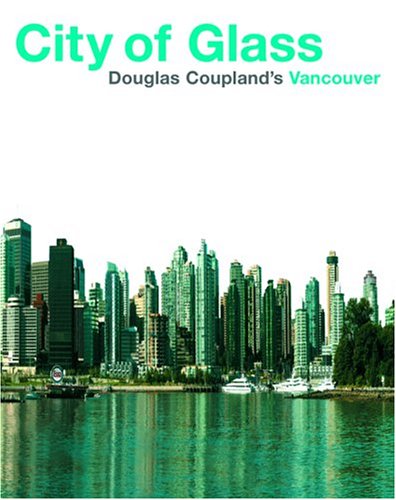
While many cities can claim to be a city of glass, the strongest contemporary claim seems to go to Vancouver, which has taken it as a bit of a nickname. Douglas Coupland actually wrote a book on Vancouver with that title, perhaps hoping to cement its grasp on the name. I will get around to a short review of said book at the end of this post.
Finally, there is a Vancouver-based independent band that goes by the name of City of Glass. At the moment, they have an EP (The Diving Bell) and a full length release (The Modern Age) both of which can be streamed in part on Bandcamp (and purchased as downloads as well). Once again, the cover art is pretty interesting, and at least a part of the reason I decided to take the plunge and support their efforts.

Ok, on to the review of Coupland. I have to admit, I have not read a lot of his work, though he did have a flash short story called "Temp" that popped up in Metro (the local free paper -- and most likely in the Toronto edition of Metro as well). He's certainly well known as a chronicler of Gen X'ers, but his work is generally intentionally quite shallow, so it doesn't hold a lot of interest for me. However, City of Glass is an interesting attempt to encompass Vancouver and explain it to outsiders. Coupland seems to feel that Vancouver is just as alien to other Canadians as it is to Americans, though Americans are more likely to lump all Canadian cities and provinces as an undifferentiated "Up North," so he perhaps has a few more sections explaining just how isolated Vancouver is from the rest of Canada, even Calgary/Edmonton to say nothing of "back east." The book has some really nice photos. Most of it holds up pretty well. Vancouver is definitely part of the Pacific Northwest far more than it is part of Canada writ large. The separation cuts both ways, and Vancouver really does often seem shafted by the federal government (the truly criminal shutting down of a major Coast Guard station being only the latest example). However, Vancouverites seem far less worried about and/or being resentful over what is going on in Ottawa than the good folks of Calgary.
Coupland also writes quite a bit about the drug trade, which is still flourishing. However, it is possible than in 5-10 years if the legalization takes hold in Washington State and Oregon, and no progress is made at the Canadian federal level, then Vancouver will lose its "title." I do think it is more likely that there will be a saner approach to winding down the Drug Wars in Canada before the same occurs in the U.S., but I guess time will tell. His bits on Grouse Mountain and the Lions Gate Bridge are good. I didn't think the entry on Stanley Park was as informative as it could have been. I would have added something about crows to the entry on birds. Where I live in Vancouver, we have a huge crow population (far beyond anything I remember from other cities) and we almost never see seagulls. I do occasionally see a bald eagle that has a nest somewhere near the Metrotown Mall, and that is always kind of neat.
Coupland is spot on (in the Seattle entry) when he laments how ridiculous it is that B.C. exports all these natural resources and doesn't do any of the manufacturing or other value added processing in the province. It is an unbelievably short sighted strategy that lets B.C. be treated more or less like a third world economy. Sadly, one of the few areas where Coupland is out of date is that the provincial tax breaks for film makers dried up, and all the films shot in Vancouver departed for other pastures (largely back to Toronto). The actors that made a pretty decent living have been squeezed and there has been serious problems in the theatre scene as well. While this may not be directly related, the video game industry that had a small footprint in Vancouver is also starting to shut down. Vancouver's few attempts to diversify its economy are not doing well at all in the 2010s, and this really doesn't bode very well for the region. Vancouver is really vulnerable to economic shocks in a way that is less true of Calgary (at least until the last of the oil sands are sucked dry) or Toronto. It definitely doesn't help that real estate is absurdly over-priced and wages are quite low relative to the cost of living. When this imbalance is factored into account, Vancouver goes from a top 10 place to live to well outside the top 50. Coupland may not share my feelings on this, as he does seem to be part of the brigade that considers Vancouver to be a kind of paradise on earth. He also goes on at some length on how Vancouver is one of the youngest cities on earth. He seems to glory in this, whereas in general I just found it a drag that the practical implications of this were that Vancouver had weak cultural institutions and perhaps the worst art museum I've ever seen in a city of over half a million. So this is a book written by a booster, but it still contains good insights (written in a pithy style) and nice photos.
Note: I don't quite know what changes he made to the revised edition, but I imagine most was carried over from the first edition but perhaps with some updating of comments on the broader economic trends impacting Vancouver. Apparently the revised version is 24 pages longer and features a few Fred Herzog photos, which I probably already have in this volume: Fred Herzog.*
* Holy smokes. I had no idea this had gone OOP and was fetching such high prices. I picked up my copy for $35. It certainly makes that seem like a bargain now. I suppose if one doesn't own the Herzog book, it may make the revised City of Glass that much more appealing.
City of Glass may refer to the first (and arguably most successful) books in Paul Auster's New York Trilogy. Despite it being grounded in well-worn (even worn out) postmodern tropes, I liked this trilogy quite a bit. While it seems to have been done before, I was drawn to the concept of the man wandering through the city, with his path tracing out letters spelling out some message, whether to God or to a potential unknown observer (at least I believe it happens in the first book of the trilogy but don't have time to check). There are a few reversals with the author and the main character bleeding together by the last book in the trilogy (again pretty standard pomo stuff). Not sure I've enjoyed anything Auster has written since nearly as much. I don't quite know what happened, and whether the fault lies with Auster or myself or both.
(I may have been vaguely aware that City of Glass had been turned into a graphic novel, but I'd never read it. As it turns out the library has a copy, so I think I'll check this out.)
City of Glass is the 3rd novel in Cassandra Clare's The Mortal Instruments (a series for young adults).

City of Glass may refer to a CD recorded by the band leader Stan Kenton comprised entirely of modernist charts by Bob Graettinger. I really do admire Kenton for going ahead and recording this, but even after repeated listens, it just never fully grabbed me. It's one of those problematic records that doesn't swing (as most jazz should) and it isn't quite serious enough to be a classical piece. It certainly isn't something I have on regular rotation, that's for sure. I do love the cover(s), however.
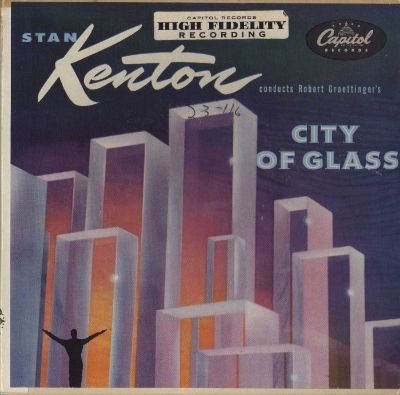 | |
| Original 10" issue |
 |
| The CD reissue |
While many cities can claim to be a city of glass, the strongest contemporary claim seems to go to Vancouver, which has taken it as a bit of a nickname. Douglas Coupland actually wrote a book on Vancouver with that title, perhaps hoping to cement its grasp on the name. I will get around to a short review of said book at the end of this post.
Finally, there is a Vancouver-based independent band that goes by the name of City of Glass. At the moment, they have an EP (The Diving Bell) and a full length release (The Modern Age) both of which can be streamed in part on Bandcamp (and purchased as downloads as well). Once again, the cover art is pretty interesting, and at least a part of the reason I decided to take the plunge and support their efforts.
Ok, on to the review of Coupland. I have to admit, I have not read a lot of his work, though he did have a flash short story called "Temp" that popped up in Metro (the local free paper -- and most likely in the Toronto edition of Metro as well). He's certainly well known as a chronicler of Gen X'ers, but his work is generally intentionally quite shallow, so it doesn't hold a lot of interest for me. However, City of Glass is an interesting attempt to encompass Vancouver and explain it to outsiders. Coupland seems to feel that Vancouver is just as alien to other Canadians as it is to Americans, though Americans are more likely to lump all Canadian cities and provinces as an undifferentiated "Up North," so he perhaps has a few more sections explaining just how isolated Vancouver is from the rest of Canada, even Calgary/Edmonton to say nothing of "back east." The book has some really nice photos. Most of it holds up pretty well. Vancouver is definitely part of the Pacific Northwest far more than it is part of Canada writ large. The separation cuts both ways, and Vancouver really does often seem shafted by the federal government (the truly criminal shutting down of a major Coast Guard station being only the latest example). However, Vancouverites seem far less worried about and/or being resentful over what is going on in Ottawa than the good folks of Calgary.
Coupland also writes quite a bit about the drug trade, which is still flourishing. However, it is possible than in 5-10 years if the legalization takes hold in Washington State and Oregon, and no progress is made at the Canadian federal level, then Vancouver will lose its "title." I do think it is more likely that there will be a saner approach to winding down the Drug Wars in Canada before the same occurs in the U.S., but I guess time will tell. His bits on Grouse Mountain and the Lions Gate Bridge are good. I didn't think the entry on Stanley Park was as informative as it could have been. I would have added something about crows to the entry on birds. Where I live in Vancouver, we have a huge crow population (far beyond anything I remember from other cities) and we almost never see seagulls. I do occasionally see a bald eagle that has a nest somewhere near the Metrotown Mall, and that is always kind of neat.
Coupland is spot on (in the Seattle entry) when he laments how ridiculous it is that B.C. exports all these natural resources and doesn't do any of the manufacturing or other value added processing in the province. It is an unbelievably short sighted strategy that lets B.C. be treated more or less like a third world economy. Sadly, one of the few areas where Coupland is out of date is that the provincial tax breaks for film makers dried up, and all the films shot in Vancouver departed for other pastures (largely back to Toronto). The actors that made a pretty decent living have been squeezed and there has been serious problems in the theatre scene as well. While this may not be directly related, the video game industry that had a small footprint in Vancouver is also starting to shut down. Vancouver's few attempts to diversify its economy are not doing well at all in the 2010s, and this really doesn't bode very well for the region. Vancouver is really vulnerable to economic shocks in a way that is less true of Calgary (at least until the last of the oil sands are sucked dry) or Toronto. It definitely doesn't help that real estate is absurdly over-priced and wages are quite low relative to the cost of living. When this imbalance is factored into account, Vancouver goes from a top 10 place to live to well outside the top 50. Coupland may not share my feelings on this, as he does seem to be part of the brigade that considers Vancouver to be a kind of paradise on earth. He also goes on at some length on how Vancouver is one of the youngest cities on earth. He seems to glory in this, whereas in general I just found it a drag that the practical implications of this were that Vancouver had weak cultural institutions and perhaps the worst art museum I've ever seen in a city of over half a million. So this is a book written by a booster, but it still contains good insights (written in a pithy style) and nice photos.
Note: I don't quite know what changes he made to the revised edition, but I imagine most was carried over from the first edition but perhaps with some updating of comments on the broader economic trends impacting Vancouver. Apparently the revised version is 24 pages longer and features a few Fred Herzog photos, which I probably already have in this volume: Fred Herzog.*
* Holy smokes. I had no idea this had gone OOP and was fetching such high prices. I picked up my copy for $35. It certainly makes that seem like a bargain now. I suppose if one doesn't own the Herzog book, it may make the revised City of Glass that much more appealing.
Sunday, December 22, 2013
What's wrong with Elf?
I'm actually going to start off with a few slightly more festive photos before broaching the highly controversial topic of "What's wrong with Elf."
First, I did manage to make a couple of snowmen in the front yard. FWIW, this was some of the best packing snow I've ever seen. It's anyone's guess if it will rain over night and wash them away. The one on the left is the little sister of the one on the right.

Then I happened to see both of the TransLink holiday buses decked out in their gear, so I snapped a photo of that.

Finally, my son made some kind of a gingerbread house with plenty of marshmallows and gummy bear trimmings as part of an after-school cooking class.

This super-sweet concoction looks just like something that Buddy the Elf would expect to see in his lunchbox every day, which is my segue into Elf the movie.
While there are definitely many charming aspects to the 2004 movie Elf, there are some things I really don't care for about it. No matter how cute the duet scene is with Zooey Deschanel, it still starts out in creepy, stalker territory, and it's hard for me to feel good about a movie where the main character is rewarded for this kind of behavior.
I understand that Buddy is portrayed as some kind of weird hybrid between an adult and a child, and you don't really know if he is developmentally challenged or not. But I find it really disheartening how he really fails to make an effort to adjust and insists on putting his spin on reality rather than learning from those around him who have a better understanding of New York. I mean he refuses to cut it out after being warned 4 or 5 times about calling Peter Dinklage an elf. I really found myself upset over that and actually started to check out of the movie around that point. I really don't find it cute. He totally ruins his father's career (of course there is a happy fairy tale ending, but why would we expect that to turn out that way under normal circumstances) because he is a selfish, immature person who refuses to listen to his elders.
More upsetting to me is when the younger son says something to James Caan about how all he cares about is work and he doesn't care about the family. I find myself taking the side of the workaholic dads who are sometimes too gruff and grumpy around the holidays. What Caan should say is something like I care about keeping a roof over our heads and food on the table. Of course, he discovers the importance of the holiday spirit and that's all well and good, but I really don't appreciate the idea that people who are serious about their work should be shamed into catering to every whim of their feckless offspring. Somehow they are the ones with the completely off-kilter values. Like everything there is a proper balance between work and family, but the makers of Elf put their thumb so much on the scale the other way (work should be relegated to a place far behind family) that I find myself quite impatient with the film in these sections.
Anyway, whether you secretly agree with me or not about the merits of Elf, enjoy the holidays. And with that, it is time for me to get back to work...
First, I did manage to make a couple of snowmen in the front yard. FWIW, this was some of the best packing snow I've ever seen. It's anyone's guess if it will rain over night and wash them away. The one on the left is the little sister of the one on the right.

Then I happened to see both of the TransLink holiday buses decked out in their gear, so I snapped a photo of that.

Finally, my son made some kind of a gingerbread house with plenty of marshmallows and gummy bear trimmings as part of an after-school cooking class.

This super-sweet concoction looks just like something that Buddy the Elf would expect to see in his lunchbox every day, which is my segue into Elf the movie.
While there are definitely many charming aspects to the 2004 movie Elf, there are some things I really don't care for about it. No matter how cute the duet scene is with Zooey Deschanel, it still starts out in creepy, stalker territory, and it's hard for me to feel good about a movie where the main character is rewarded for this kind of behavior.
I understand that Buddy is portrayed as some kind of weird hybrid between an adult and a child, and you don't really know if he is developmentally challenged or not. But I find it really disheartening how he really fails to make an effort to adjust and insists on putting his spin on reality rather than learning from those around him who have a better understanding of New York. I mean he refuses to cut it out after being warned 4 or 5 times about calling Peter Dinklage an elf. I really found myself upset over that and actually started to check out of the movie around that point. I really don't find it cute. He totally ruins his father's career (of course there is a happy fairy tale ending, but why would we expect that to turn out that way under normal circumstances) because he is a selfish, immature person who refuses to listen to his elders.
More upsetting to me is when the younger son says something to James Caan about how all he cares about is work and he doesn't care about the family. I find myself taking the side of the workaholic dads who are sometimes too gruff and grumpy around the holidays. What Caan should say is something like I care about keeping a roof over our heads and food on the table. Of course, he discovers the importance of the holiday spirit and that's all well and good, but I really don't appreciate the idea that people who are serious about their work should be shamed into catering to every whim of their feckless offspring. Somehow they are the ones with the completely off-kilter values. Like everything there is a proper balance between work and family, but the makers of Elf put their thumb so much on the scale the other way (work should be relegated to a place far behind family) that I find myself quite impatient with the film in these sections.
Anyway, whether you secretly agree with me or not about the merits of Elf, enjoy the holidays. And with that, it is time for me to get back to work...
Saturday, December 21, 2013
December updates
Well, I have not been posting much at all, though I have been keeping quite busy. I am in one of those manic phases at work where I have been desperately trying to finish this project to hand off to a consultant so they can get the work started in Dec. rather than Jan. I may have missed that window, however. The most disappointing thing is that this is only the first phase (and it has taken a solid week). The work all has to be repeated with the Census block group data, but I won't be able to undertake that work to refine the results until late Jan. (if then).
The most important update is that I have a job offer (in principle) to start working in a Vancouver office in Feb. and then to move to Toronto in July, which has been the overarching plan for some time. However, I really expected (or rather really hoped) to have the offer in hand this week so I could sign and then begin the visa process. That didn't happen, and now I wonder if I will get the offer before the 25th. I think losing even a couple of days in mid-Dec. has made it unlikely that the paperwork will go through in time, which is most unfortunate. I still have a bunch of questions as to how the visa paperwork all gets processed (and whether the whole family has to go back out to the airport), but that's secondary to getting the offer in writing. Curiously, another firm had been a bit interested but dragging its feet. Suddenly they decided to put a package together, though I don't think they have much of a chance (unless the first offer completely falls apart). Well, it's always nice to be in demand, particularly in this economic climate. It partly justifies the insane amount of work I put in over the past two years...
It has properly snowed in Vancouver, which is fairly rare. It made a huge mess of the Friday morning commute, that's for sure. I even saw some snowmen in front yards on the way home. If I can find my proper gloves, I might see about making one with the kids in the morning. It may well rain tonight, making things an even bigger mess. Given that we have the snow now, I'd just as soon have a bit left on the grass for Christmas. Anyway, if the weather outlook doesn't improve, then we probably won't go to the VanDusen Gardens to look at the lights after all (just as well I didn't say anything to the kids).
It will be a fairly Christmas-y weekend. I promised to help my daughter make some decorations for the tree. I have a fair bit of wrapping to do Sunday, though I will note that the actual shopping was done a while ago. Even better, we got the presents in the mail from my side of the family. My mother-in-law sent some package that has been completely lost, which is most unfortunate. Last weekend we got the tree up and even sent out the Xmas cards (electronically). So overall, we're in good shape. I may have the energy to pick up gingerbread mix and make gingerbread men over the weekend, but I'm not promising anything...
As far as reading, I am just stubborn enough to want to push through Proust, but it has been delegated to secondary reading, and at this rate it takes me about 2 months/book, so I guess by next fall I will be finished. In the meantime, I read some of Robert Walser's stories and thought they were ok, but not life-changing. I've just started Amsterdam Stories by Nescio, and they are in the same vein, but a bit more compelling. The real author of these stories (J.H.F. Grönloh) should be an inspiration to me. Much like Wallace Stevens, he was a business man (ultimately a director of the Holland–Bombay Trading Company) who carved out a bit of time here and there to write. Of the Mitteleuropa authors I was discussing, I also read Gregor von Rezzori's Oedipus at Stalingrad. I liked the early parts (which occasionally reminded me of a George Grosz tableau) but thought the ending kind of disappointing. Nonetheless, I have also checked out The Orient Express from the library, which is one of Rezzori's last novels.
I am just beginning Marilynne Robinson's Gilead, which features an interesting narrative voice -- that of an elderly preacher who has a young son, whom he doesn't expect to see reach his teen years. While this may not have been her intent, I am hearing the voice in my head as Garrison Keillor. He's done a lot of stuff obviously, which floats in and out of print,* but one of my enduring favorites is Local Man Moves to the City where he has a classic bit about an idea he gets of preaching from Thoreau's Walden on the NYC subway. So that is sort of floating in my head as I read the book, and so far it is making it more enjoyable.
Speaking of other strange juxtapositions, I am finding myself thinking of the merry Anglo-Irish in Molly Keane's work as just a bit like the well-to-do Southerners in Faulkner. Normally Keane is writing as an insider and Faulkner as an outsider. However, they come together nicely in Keane's Conversation Piece and Faulkner's The Reivers, even to the point of having unreliable cars that become minor plot points. If I were still in that game, that would be an interesting essay, putting the two novels together. So far, I am enjoying Conversation Piece, though it seems a fairly slight novel, all things considered.
I did manage to finish Moshin Hamid's The Reluctant Terrorist and found it a thoroughly disappointing book. I'll just call it a damp squib of a book and leave it at that. (Well, I will add that his earlier novel, Moth Smoke, is a lot more interesting.) There are a few interesting books coming down the pike (in my TBR pile) and I'm hoping I get to them by the spring.
So once I write it all down, it becomes apparent that actually quite a lot has been going on. My biggest disappointment of recent weeks (other than not being able to round up a babysitter when I needed one and to a lesser extent not getting the offer in hand this week) is that I simply do not have the energy to write after work. (The reading is almost all done in transit, but I suppose I could attempt to write, rather than read, on the bus and train. Something to consider, I suppose.)
* The library has more of Keillor than I had imagined, and I might try to check some of his audio books out before the move, but no local library seems to have Local Man Moves to the City. I believe I already tossed my cassette version after transferring it to the computer, but if it turns up I could offer it to the Burnaby Library (they actually still have a few cassettes in their collection!).
The most important update is that I have a job offer (in principle) to start working in a Vancouver office in Feb. and then to move to Toronto in July, which has been the overarching plan for some time. However, I really expected (or rather really hoped) to have the offer in hand this week so I could sign and then begin the visa process. That didn't happen, and now I wonder if I will get the offer before the 25th. I think losing even a couple of days in mid-Dec. has made it unlikely that the paperwork will go through in time, which is most unfortunate. I still have a bunch of questions as to how the visa paperwork all gets processed (and whether the whole family has to go back out to the airport), but that's secondary to getting the offer in writing. Curiously, another firm had been a bit interested but dragging its feet. Suddenly they decided to put a package together, though I don't think they have much of a chance (unless the first offer completely falls apart). Well, it's always nice to be in demand, particularly in this economic climate. It partly justifies the insane amount of work I put in over the past two years...
It has properly snowed in Vancouver, which is fairly rare. It made a huge mess of the Friday morning commute, that's for sure. I even saw some snowmen in front yards on the way home. If I can find my proper gloves, I might see about making one with the kids in the morning. It may well rain tonight, making things an even bigger mess. Given that we have the snow now, I'd just as soon have a bit left on the grass for Christmas. Anyway, if the weather outlook doesn't improve, then we probably won't go to the VanDusen Gardens to look at the lights after all (just as well I didn't say anything to the kids).
It will be a fairly Christmas-y weekend. I promised to help my daughter make some decorations for the tree. I have a fair bit of wrapping to do Sunday, though I will note that the actual shopping was done a while ago. Even better, we got the presents in the mail from my side of the family. My mother-in-law sent some package that has been completely lost, which is most unfortunate. Last weekend we got the tree up and even sent out the Xmas cards (electronically). So overall, we're in good shape. I may have the energy to pick up gingerbread mix and make gingerbread men over the weekend, but I'm not promising anything...
As far as reading, I am just stubborn enough to want to push through Proust, but it has been delegated to secondary reading, and at this rate it takes me about 2 months/book, so I guess by next fall I will be finished. In the meantime, I read some of Robert Walser's stories and thought they were ok, but not life-changing. I've just started Amsterdam Stories by Nescio, and they are in the same vein, but a bit more compelling. The real author of these stories (J.H.F. Grönloh) should be an inspiration to me. Much like Wallace Stevens, he was a business man (ultimately a director of the Holland–Bombay Trading Company) who carved out a bit of time here and there to write. Of the Mitteleuropa authors I was discussing, I also read Gregor von Rezzori's Oedipus at Stalingrad. I liked the early parts (which occasionally reminded me of a George Grosz tableau) but thought the ending kind of disappointing. Nonetheless, I have also checked out The Orient Express from the library, which is one of Rezzori's last novels.
I am just beginning Marilynne Robinson's Gilead, which features an interesting narrative voice -- that of an elderly preacher who has a young son, whom he doesn't expect to see reach his teen years. While this may not have been her intent, I am hearing the voice in my head as Garrison Keillor. He's done a lot of stuff obviously, which floats in and out of print,* but one of my enduring favorites is Local Man Moves to the City where he has a classic bit about an idea he gets of preaching from Thoreau's Walden on the NYC subway. So that is sort of floating in my head as I read the book, and so far it is making it more enjoyable.
Speaking of other strange juxtapositions, I am finding myself thinking of the merry Anglo-Irish in Molly Keane's work as just a bit like the well-to-do Southerners in Faulkner. Normally Keane is writing as an insider and Faulkner as an outsider. However, they come together nicely in Keane's Conversation Piece and Faulkner's The Reivers, even to the point of having unreliable cars that become minor plot points. If I were still in that game, that would be an interesting essay, putting the two novels together. So far, I am enjoying Conversation Piece, though it seems a fairly slight novel, all things considered.
I did manage to finish Moshin Hamid's The Reluctant Terrorist and found it a thoroughly disappointing book. I'll just call it a damp squib of a book and leave it at that. (Well, I will add that his earlier novel, Moth Smoke, is a lot more interesting.) There are a few interesting books coming down the pike (in my TBR pile) and I'm hoping I get to them by the spring.
So once I write it all down, it becomes apparent that actually quite a lot has been going on. My biggest disappointment of recent weeks (other than not being able to round up a babysitter when I needed one and to a lesser extent not getting the offer in hand this week) is that I simply do not have the energy to write after work. (The reading is almost all done in transit, but I suppose I could attempt to write, rather than read, on the bus and train. Something to consider, I suppose.)
* The library has more of Keillor than I had imagined, and I might try to check some of his audio books out before the move, but no local library seems to have Local Man Moves to the City. I believe I already tossed my cassette version after transferring it to the computer, but if it turns up I could offer it to the Burnaby Library (they actually still have a few cassettes in their collection!).
Saturday, November 30, 2013
Britten bricolage
By this, I mean this post will have a number of diverse topics, all held together loosely by a through-thread of being at least tangentially related to Benjamin Britten, who would have been 100 this year, had he still been alive.
I have not actually heard all that much Britten live, or at least not many of his substantial works. (The way I file concert programs is by the main pieces, so if the program included an overture by Britten and a symphony or concerto by another composer, it would be filed under the second name. Indeed, the only major work that I know I've seen live was Britten's Violin Concerto by the VSO back in Feb. and this program still gets filed under Elgar's Enigma Variations. Indeed, this was one of the stronger concerts I've seen them do.)
I had thought that I would have seen more Britten this year had I still been in Chicago, but it looks as if the CSO only did the War Requiem (which received very mixed reviews, so I am not really that sorry to have missed it). Some chamber music was done at separate festivals (perhaps in Hyde Park). It's so odd that I read (occasionally) that Britten can lay claim to being the most important British composer of the 20th Century. He really doesn't do that much for me, and I would definitely rate Vaughan Williams and his symphony cycle over Britten. But I suppose for people who love opera there is no comparison, and they tend to argue that writing operas is a higher form of music than symphonies. One of my (dark) secrets is that I loathe opera. I tried several times to go and soak it in, particularly because a UT professor (Linda Hutcheon) loved it and made it possible for us to see several operas at a major discount. But I can simply never get away from how distorted the voices, particularly the female ones, are, almost always sacrificing clarity and communication for odd vocal effects. The transmission of meaning is far below the musicality of the phrases.
As it happens, Vancouver Opera is doing 4 performances of Britten's Albert Herring (a comic opera set in an English village). One performance is tonight and the rest are next weekend. Part of me feels I should go, since this is such a rare opportunity. The larger, more sensible side of me says I would hate it, since I always hate opera. And indeed, it just so happens that BBC Radio 3 broadcast the entire performance of Albert Herring for the Opera on 3 program. (Last day is today, or I would provide a link.) Sure enough, despite the fact that the words are even in English, I can't understand what the women are singing, and I find the whole thing baroque and distasteful. I thought a bit more of Turn of the Screw and Death in Venice (some excerpts were on composer of the week, but it is almost certainly because male and children's voices were featured), but I can still tell it would be agony for me to sit through an entire performance of either. I don't even care that much for his War Requiem, and that is far more restrained. I would be pretty surprised if I ever do make it to a performance of the Requiem (perhaps if I were given the tickets...).
So if you completely discount all the vocal works and opera, then Britten clearly is behind Vaughan Williams, though he still wrote some classic works for cello (often premiered by Mstislav Rostropovich (whom I just missed seeing conduct in Chicago, as he passed away shortly before his scheduled concert)) and 3 string quartets.
Sometimes you get second chances when it comes to hearing chamber music, and then you have to grab them. I honestly cannot remember if I saw the Takacs Quartet earlier this year (January) playing Britten's String Quartet #3. They are on my calendar, but with a big question mark (and I have not unearthed the corresponding program). I would have just been back from TRB and may not have wanted to abandon the family so soon. (I think Monday or Tuesday, I'll actually call the Friends of Chamber Music and see if they still have my order on file.) Still, it is looking like I gave this a miss, which is a shame, as they have become first-rate Britten interpreters. However, the Takacs Quartet is back in town Sunday afternoon, and I have recovered enough to sit through this concert.* They are not playing Britten, however, but Mozart, Beethoven and Bartok (Quartet #2). It looks like Bartok is back in vogue, and I'll see three of his string quartets this season. As far as Britten goes, there is a special concert in February where all 3 of his string quartets will be performed. I'm pretty sure I will go to this, though it looks like it will mean a late night out on a school night. (I also can pick up a CD of Tackas playing all three quartets if it means that much to me...)
One of the somewhat annoying thing about the move to these massive classical box sets is that you can potentially end up with a lot of overlap with other things you own. Also, you end up with the core repertoire over and over. (I'm not even sure how many Beethoven and Brahms symphony cycles I own, though with different conductor and orchestras at least.) In any case, I had a few small, focused box sets of Carlo Giulini conducting U.S.-based orchestras. Then this year, EMI opened the vaults again and put out this massive box of almost everything Giulini recorded in London. The problem for me is that, while he is recording with a different orchestra, he covered the same repertoire! I went through the contents pretty carefully, and as far as I can tell, the only major pieces that I didn't already have were Dvorak Symphony 7 (which was available to stream on-line) and Britten's Four Sea Intervals from Peter Grimes. While these are interesting pieces, I can hardly justify buying a huge box set just for 20 minutes or so worth of music! As it happens I recently recorded Oliver Knussen conducting the BBC Symphony Orchestra in these pieces, so I think I'm covered for now. (And while I am not buying any tickets that far out, the VSO will be doing the Passacaglia from Peter Grimes, along with Respighi's Pines of Rome, in June.)
Now another important thing about Britten is that he was in a relationship with Peter Pears, who sang in virtually all the operas Britten wrote, but that Britten also apparently struggled with his attraction to young boys. This is sort of alluded to the composer of the week programs once they get around to discussing The Turn of the Screw, and it became an even bigger issue in Death in Venice. As I was listening to the clips, I flashed back to Alan Bennett's play The Habit of Art, which I saw this summer. They had a young boy up in the rafters practicing for some opera, and he sounded quite a bit like the bits from Turn of the Screw. The bulk of The Habit of Art focuses on what it means to be an aging artist, delivering a uncomfortable portrait of Auden in decline. However, in the second act, Britten breezes in and talks about his difficulties in his work on Death in Venice. He's still a celebrity, touring the world, but he no longer seems as sure of himself, and there are hints that 1) the public won't accept his move into atonality for Death in Venice and 2) his interest in young boys may cause trouble. Auden definitely warns him that he is courting trouble, though it seems in real life Britten kept any urges under control. (While I think the company did a good job, I suspect that they should have found a slightly older actor to play Britten, as this one seemed fairly chipper -- and not like a 60 year old with a heart condition that nearly killed him as he was writing Death in Venice!) No question this dramatization really put this information about Auden and Britten into my head in a way that just reading about it or hearing it alluded to in the radio programs did not. As it happens, The Habit of Art is a multi-level play, with the actors putting on a play about Auden and Britten. This works for me, but certainly confused many in the audience, even after it had been spelled out in the hand-out. I think there is always this tension between doing something interesting for oneself (as a writer or even performer, slightly bored with conventional theatre) and not making things too complicated for audiences, who are increasingly shallow and trained to prefer linear narratives.
Just last week I saw Except in the Unlikely Event of War, which has two different time periods (1960s and 2010s) and three different sets of characters, including meta-level characters (the actors play themselves grumbling about being in a play that isn't political enough!). There is no question it was better seeing this in performance with video-- and costume changes! -- that helped me follow along, rather than catching it as a staged reading back in April. Still, a lot of the audience was very confused. And while the meta-theatrical parts were often the funniest (and presumably most fun to play), I wonder if they were really necessary, or if they just detracted from the core message. Not sure about that. Well, that is indeed pretty far from Britten, and I am not sure I can find my way back, other than Britten was quite political in his own way, being a pacifist during the ramp-up to WWII. In fact, both Auden and Britten (and Christopher Isherwood and Peter Pears) all left England for the U.S. in 1939. Britten and Pears return to the U.K. in 1942, registering as conscientious objectors, which caused trouble for them for a number of years, but his obvious talents wore down any lingering resentments in his native country. Still, his overt homosexuality became a problem in the 1950s when there was a wave of repression led by Home Secretary, David Maxwell Fyfe.
Britten was an extreme example of the single-minded artist, who sacrificed many friendships to art and who often discarded people who were no longer useful to him. I understand this tendency to be so devoted to work, as well as to think about people instrumentally and have to fight it myself (probably not all that successfully). He truly was one of the most important English composers of all time, and I will try to listen to a wider range of his work in his centenary year. (I just wish he hadn't written quite so much choral stuff along with 15 or so operas!)
* Just back from the Takacs Quartet. After watching them for a while, I am now convinced that I did make it to see them back in Jan. I'm having trouble verifying this, however, since I ordered the tickets by phone (so no email trail), and I've switched credit card companies, so I can't tell exactly when the order was processed. I did email Friends of Chamber Music to see if they had it on record. Ideally, the concert program will turn up, which would certainly settle the matter.
I have not actually heard all that much Britten live, or at least not many of his substantial works. (The way I file concert programs is by the main pieces, so if the program included an overture by Britten and a symphony or concerto by another composer, it would be filed under the second name. Indeed, the only major work that I know I've seen live was Britten's Violin Concerto by the VSO back in Feb. and this program still gets filed under Elgar's Enigma Variations. Indeed, this was one of the stronger concerts I've seen them do.)
I had thought that I would have seen more Britten this year had I still been in Chicago, but it looks as if the CSO only did the War Requiem (which received very mixed reviews, so I am not really that sorry to have missed it). Some chamber music was done at separate festivals (perhaps in Hyde Park). It's so odd that I read (occasionally) that Britten can lay claim to being the most important British composer of the 20th Century. He really doesn't do that much for me, and I would definitely rate Vaughan Williams and his symphony cycle over Britten. But I suppose for people who love opera there is no comparison, and they tend to argue that writing operas is a higher form of music than symphonies. One of my (dark) secrets is that I loathe opera. I tried several times to go and soak it in, particularly because a UT professor (Linda Hutcheon) loved it and made it possible for us to see several operas at a major discount. But I can simply never get away from how distorted the voices, particularly the female ones, are, almost always sacrificing clarity and communication for odd vocal effects. The transmission of meaning is far below the musicality of the phrases.
As it happens, Vancouver Opera is doing 4 performances of Britten's Albert Herring (a comic opera set in an English village). One performance is tonight and the rest are next weekend. Part of me feels I should go, since this is such a rare opportunity. The larger, more sensible side of me says I would hate it, since I always hate opera. And indeed, it just so happens that BBC Radio 3 broadcast the entire performance of Albert Herring for the Opera on 3 program. (Last day is today, or I would provide a link.) Sure enough, despite the fact that the words are even in English, I can't understand what the women are singing, and I find the whole thing baroque and distasteful. I thought a bit more of Turn of the Screw and Death in Venice (some excerpts were on composer of the week, but it is almost certainly because male and children's voices were featured), but I can still tell it would be agony for me to sit through an entire performance of either. I don't even care that much for his War Requiem, and that is far more restrained. I would be pretty surprised if I ever do make it to a performance of the Requiem (perhaps if I were given the tickets...).
So if you completely discount all the vocal works and opera, then Britten clearly is behind Vaughan Williams, though he still wrote some classic works for cello (often premiered by Mstislav Rostropovich (whom I just missed seeing conduct in Chicago, as he passed away shortly before his scheduled concert)) and 3 string quartets.
Sometimes you get second chances when it comes to hearing chamber music, and then you have to grab them. I honestly cannot remember if I saw the Takacs Quartet earlier this year (January) playing Britten's String Quartet #3. They are on my calendar, but with a big question mark (and I have not unearthed the corresponding program). I would have just been back from TRB and may not have wanted to abandon the family so soon. (I think Monday or Tuesday, I'll actually call the Friends of Chamber Music and see if they still have my order on file.) Still, it is looking like I gave this a miss, which is a shame, as they have become first-rate Britten interpreters. However, the Takacs Quartet is back in town Sunday afternoon, and I have recovered enough to sit through this concert.* They are not playing Britten, however, but Mozart, Beethoven and Bartok (Quartet #2). It looks like Bartok is back in vogue, and I'll see three of his string quartets this season. As far as Britten goes, there is a special concert in February where all 3 of his string quartets will be performed. I'm pretty sure I will go to this, though it looks like it will mean a late night out on a school night. (I also can pick up a CD of Tackas playing all three quartets if it means that much to me...)
One of the somewhat annoying thing about the move to these massive classical box sets is that you can potentially end up with a lot of overlap with other things you own. Also, you end up with the core repertoire over and over. (I'm not even sure how many Beethoven and Brahms symphony cycles I own, though with different conductor and orchestras at least.) In any case, I had a few small, focused box sets of Carlo Giulini conducting U.S.-based orchestras. Then this year, EMI opened the vaults again and put out this massive box of almost everything Giulini recorded in London. The problem for me is that, while he is recording with a different orchestra, he covered the same repertoire! I went through the contents pretty carefully, and as far as I can tell, the only major pieces that I didn't already have were Dvorak Symphony 7 (which was available to stream on-line) and Britten's Four Sea Intervals from Peter Grimes. While these are interesting pieces, I can hardly justify buying a huge box set just for 20 minutes or so worth of music! As it happens I recently recorded Oliver Knussen conducting the BBC Symphony Orchestra in these pieces, so I think I'm covered for now. (And while I am not buying any tickets that far out, the VSO will be doing the Passacaglia from Peter Grimes, along with Respighi's Pines of Rome, in June.)
Now another important thing about Britten is that he was in a relationship with Peter Pears, who sang in virtually all the operas Britten wrote, but that Britten also apparently struggled with his attraction to young boys. This is sort of alluded to the composer of the week programs once they get around to discussing The Turn of the Screw, and it became an even bigger issue in Death in Venice. As I was listening to the clips, I flashed back to Alan Bennett's play The Habit of Art, which I saw this summer. They had a young boy up in the rafters practicing for some opera, and he sounded quite a bit like the bits from Turn of the Screw. The bulk of The Habit of Art focuses on what it means to be an aging artist, delivering a uncomfortable portrait of Auden in decline. However, in the second act, Britten breezes in and talks about his difficulties in his work on Death in Venice. He's still a celebrity, touring the world, but he no longer seems as sure of himself, and there are hints that 1) the public won't accept his move into atonality for Death in Venice and 2) his interest in young boys may cause trouble. Auden definitely warns him that he is courting trouble, though it seems in real life Britten kept any urges under control. (While I think the company did a good job, I suspect that they should have found a slightly older actor to play Britten, as this one seemed fairly chipper -- and not like a 60 year old with a heart condition that nearly killed him as he was writing Death in Venice!) No question this dramatization really put this information about Auden and Britten into my head in a way that just reading about it or hearing it alluded to in the radio programs did not. As it happens, The Habit of Art is a multi-level play, with the actors putting on a play about Auden and Britten. This works for me, but certainly confused many in the audience, even after it had been spelled out in the hand-out. I think there is always this tension between doing something interesting for oneself (as a writer or even performer, slightly bored with conventional theatre) and not making things too complicated for audiences, who are increasingly shallow and trained to prefer linear narratives.
Just last week I saw Except in the Unlikely Event of War, which has two different time periods (1960s and 2010s) and three different sets of characters, including meta-level characters (the actors play themselves grumbling about being in a play that isn't political enough!). There is no question it was better seeing this in performance with video-- and costume changes! -- that helped me follow along, rather than catching it as a staged reading back in April. Still, a lot of the audience was very confused. And while the meta-theatrical parts were often the funniest (and presumably most fun to play), I wonder if they were really necessary, or if they just detracted from the core message. Not sure about that. Well, that is indeed pretty far from Britten, and I am not sure I can find my way back, other than Britten was quite political in his own way, being a pacifist during the ramp-up to WWII. In fact, both Auden and Britten (and Christopher Isherwood and Peter Pears) all left England for the U.S. in 1939. Britten and Pears return to the U.K. in 1942, registering as conscientious objectors, which caused trouble for them for a number of years, but his obvious talents wore down any lingering resentments in his native country. Still, his overt homosexuality became a problem in the 1950s when there was a wave of repression led by Home Secretary, David Maxwell Fyfe.
Britten was an extreme example of the single-minded artist, who sacrificed many friendships to art and who often discarded people who were no longer useful to him. I understand this tendency to be so devoted to work, as well as to think about people instrumentally and have to fight it myself (probably not all that successfully). He truly was one of the most important English composers of all time, and I will try to listen to a wider range of his work in his centenary year. (I just wish he hadn't written quite so much choral stuff along with 15 or so operas!)
* Just back from the Takacs Quartet. After watching them for a while, I am now convinced that I did make it to see them back in Jan. I'm having trouble verifying this, however, since I ordered the tickets by phone (so no email trail), and I've switched credit card companies, so I can't tell exactly when the order was processed. I did email Friends of Chamber Music to see if they had it on record. Ideally, the concert program will turn up, which would certainly settle the matter.
Subscribe to:
Posts (Atom)